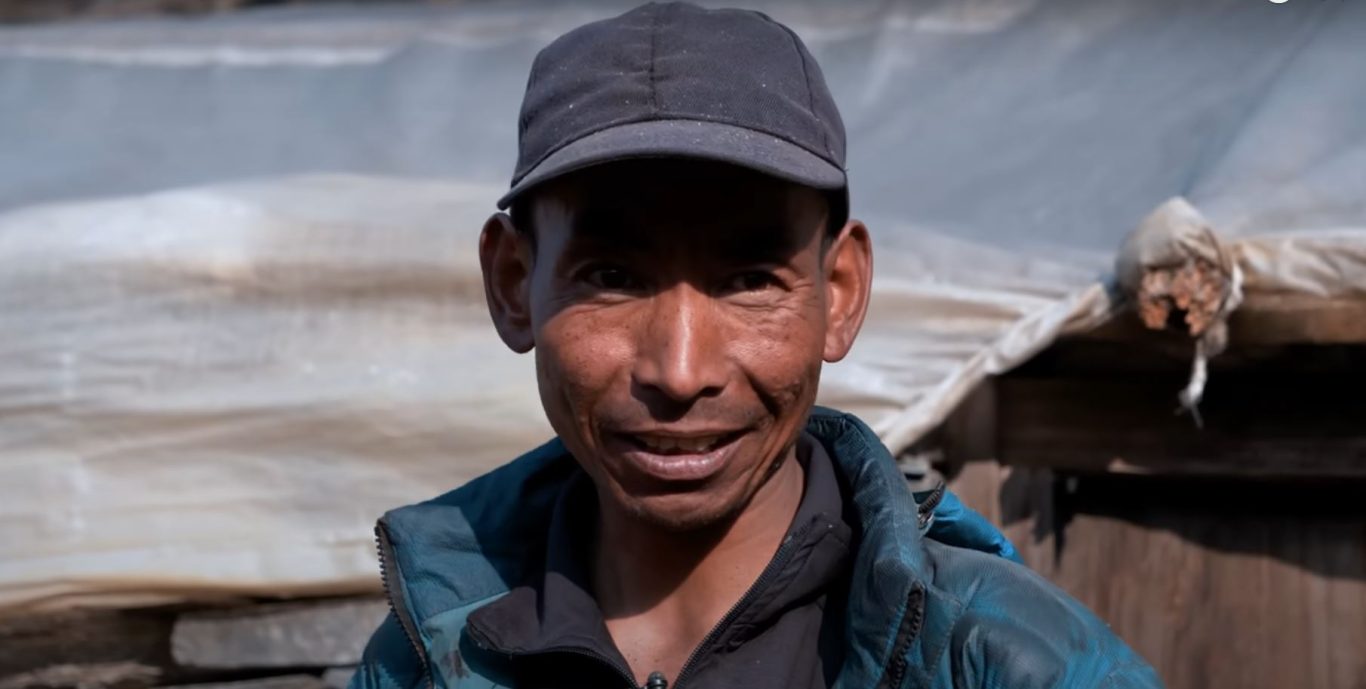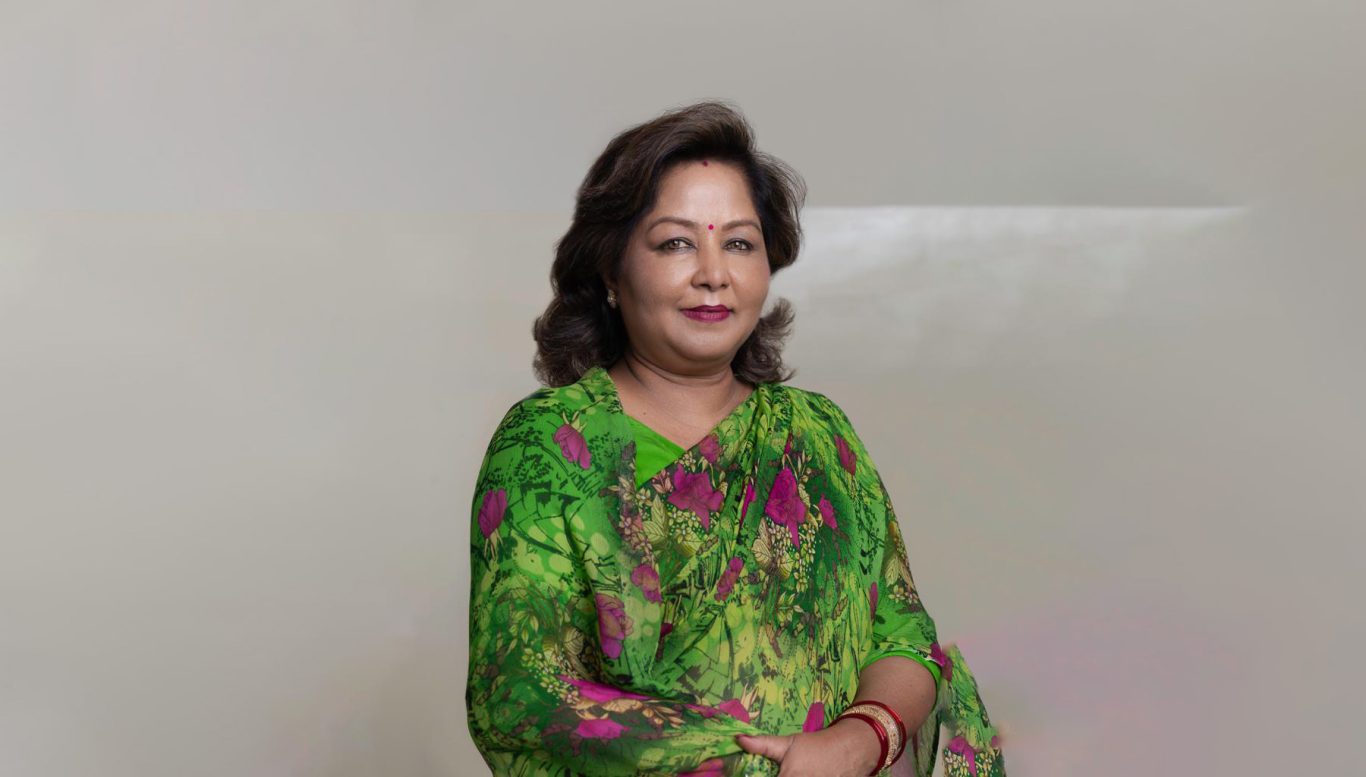



Winter in Dhorpatan, 3,900 meters above sea level in the Dhaulagiri range, is bleak. The Dhor valley is blanketed in snow and residents move south for the winter. All except for two elderly women — Ratima Bishwakarma and Kalima Bishwakarma — who remain behind as caretakers. Ratima and Kalima are widows of the same man.
This is the central conceit of the documentary film Dhorpatan: No Winter Holidays and it is an intriguing one. One might imagine high drama set against pristine snow-capped mountains as the two women grow increasingly antagonistic when isolated. This isn’t that movie. There’s no drama; there’s barely any plot or forward momentum; and the mountain shots are kept to a minimum. Instead, we get a relationship that is equal parts camaraderie and rivalry. The film dwells on these two women, irascible, foul-mouthed, and endlessly entertaining. They check up on homes that have been abandoned for the winter, complaining about one ‘fat wife’ who refuses to pay them for their maintenance work. They feed their cow and their goats. They collect firewood and meager greens hiding in the dirt from the winter snow. They cook meals over a fire and they bicker like the old friends they are. It is an empathetic portrayal, a human one that privileges connection over documentation.
The two women might be the stars of the show but the landscape is just as much of a character. The village that they live in, the surrounding hills and forests, the distant mountains, they all occupy as much screentime as the two women. And these are not cliche images of snow-capped mountains and fabulous vistas that characterize Nepal under a foreign gaze; these are more mundane images, trees breathing, forests swaying, clouds rolling past the hills. Often, the filmmakers will simply dwell on a single frame for seconds. Many of these frames are still, without even the passage of clouds. They’re quiet, meditative, allowing the audience to sit and breathe alongside the women in their space. Just as the landscape shapes the women, it gives the film contour.
Directors Rajan Khatet and Sunir Pandey have managed to create the kind of film that is most difficult to achieve, one that is not a cliche. All too often, documentaries about Nepal are painful, full of grief, woe, and hardship. These are seemingly the most pronounced markers of a poor, third-world country and thus, they are repeated ad nauseam in every film, documentary, novel, and media report. Then, there are tropes more specific to Nepal — ‘sandwiched between India and China’, ‘desperately poor’, and Mount Everest. This film traffics in none of them. The poverty of these women is never a factor. In fact, they might not even be very poor by Dhorpatan standards; we don’t know because it doesn’t matter. Their lives might be difficult but they are not receptacles for pity. They might be strong but they are not exemplars of resilience either. They’re old but they’re not invalids. They laugh, they curse, they sing, they dream. It is this humanity that permeates the documentary.
There are small moments that breathe life into the film, like when Kalima loses her cow in a storm. She had only just been putting her clothes up to dry when the storm hit and she went in search of her cow. She returns to find her clothes covered in snow and in a fit of anger, throws rocks at the house where Ratima is resting cozily beside the fire. She couldn’t even be bothered to take the clothes in, Kalima curses. Ratima too complains, saying that one day, she’s going to beat Kalima. This back-and-forth between the two is a moment of levity for the audience but it also characterizes their push-and-pull relationship. I wish we had gotten more moments like these because as empathetic as the film is, it doesn’t really tell us much about the two women. Ratima is childless while Kalima has a daughter. Ratima dreams often of her husband and seeks to preserve his memory but Kalima dreams of other things. Ratima is often ill while Kalima is spry even in her old age. We learn all of this but it isn’t nearly enough.
And so we come to the film’s flaws. The slow pacing is something I don’t mind, especially in documentaries. But the stillness should serve a larger purpose and I don’t know if it does that. Beyond stressing the remote, isolated nature of the village, do the pacing and the still frames serve the emotional heart of the film? Is there even an emotional center? The relationship between the two women should be it but at the end of the film, the audience doesn’t come away with an emotional arc. The film ends as it begins — in the middle. We are observers only of a vignette.
Towards the end of the film, the winter fades and spring comes, bringing with it all the other inhabitants of the village. We finally see Ratima and Kalima in a broader context but I question if this ending adds anything much to the film. We don’t learn much here that we didn’t earlier. It feels tacked on, a comforting way to provide closure to the film, as if to say winter always gives way to spring. For a film that’s been so empathetic in its observation of the women so far, the ending doesn’t quite land.
Despite these flaws, Dhorpatan: No Winter Holidays is a rare portrayal of female friendship, warts and all. It doesn’t condescend or pity anyone; in fact, it is joyful and filled with life. This is the kind of documentary that I’d love to see more of from Nepali filmmakers. Humanizing portraits that go beyond cliched representation of a ‘poor but happy’ people. And directors Kathet and Pandey have been rewarded for it. Dhorpatan premiered at the Sheffield Doc Fest in the UK and went on to show at the Alternativa Film Project in Almaty, Kazakhstan where it won the ‘Nativa’ award which goes to films that showcase national or cultural identity. It also jointly won the Best Feature Documentary award at the DokuBaku International Documentary Film Festival in Baku, Azerbaijan, Best Documentary at the Nepal Human Rights International Film Festival, and Honorable Mention for Best Film at the Lima Alterna Film Festival in Lima, Peru.
Documentaries have always thrived in Nepal. Not commercially, of course, but artistically. Kesang Tseten’s films are still the gold standard for any Nepali filmmaker but in recent times, we’ve had numerous documentaries and even feature films showing at prestigious international film festivals. The most well-known among them is probably Min Bham’s Kalo Pothi: The Black Hen, which premiered at the Venice Film Festival and even won Best Film at its Critics Week. Then, Deepak Rauniyar’s Seto Surya (White Sun) too premiered at Venice and won the Interfilm Award. When it comes to documentaries, Fidel Devkota’s The Red Suitacse premiered at Venice and Nabin Subba’s A Road to a Village showed at the Toronto International Film Festival. Nepali films are thus slowly but surely making their artistic intentions known globally.
Sadly, the domestic film industry continues to churn out hopelessly insipid fare. Films with even an iota of creativity, like Aina Jhyal ko Putali or Paani Photo, have very short runs and barely make their money back. Filmmakers with an artistic bent are forced to look elsewhere for funding. Certainly, art films are not going to have the same kind of commercial appeal as the latest iteration of Nai Na Bhannu La but they don’t have to be complete bombs at the box office. Films like Dhorpatan give me hope, though. It is currently showing at Cine de Chef in the CTC Mall and doing very well for a documentary. It was apparently the filmmakers’ intention to show the documentary in a theater to a Nepali audience. “We want to show that these types of films have an audience, ” Pandey told OnlineKhabar. “We aim to establish a culture of watching such movies in a movie theatre.”
I certainly hope that the Nepali movie-going audience will grow to appreciate more films like Dhorpatan. We have a great many stories to tell. I just hope there are enough people trying to tell them and an audience that is ready to listen.
Dhorpatan: No Winter Holidays (2023, 1 h 19 m)
Directed by Rajan Kathet & Sunir Pandey
Cinematography by Babin Dulal
Featuring Ratima Bishwakarma & Kalima Bishwakarma