

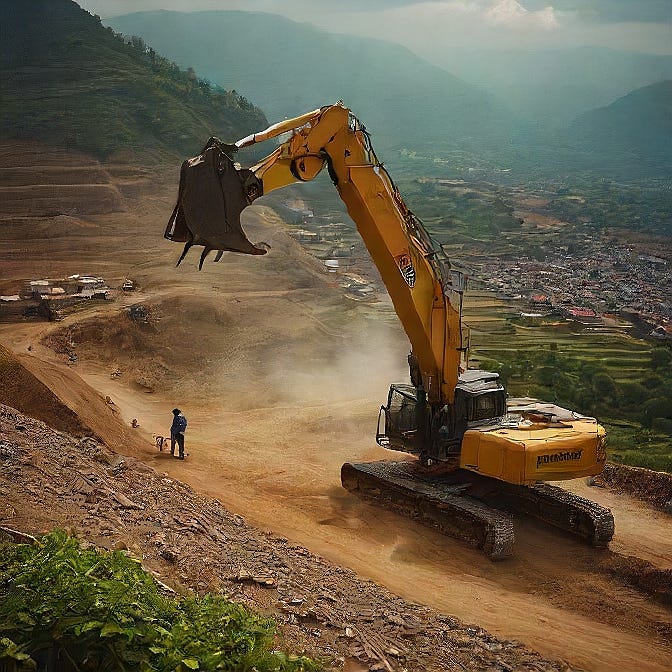
Last week, on August 14, the Supreme Court issued a directive to the government, instructing it to draft a new law that ensures that ‘crusher’ industries operate in an environmentally sustainable manner. Crushers are a blanket term for heavy machinery utilized to harvest raw materials from rivers and hillsides, such as stones, gravel, and sand. This directive was necessary as the crusher industry has long been running rampant across the country, hollowing out entire hills and excavating entire rivers.
However, the Supreme Court has issued numerous other rulings regarding protecting the environment generally and regulating mining and excavation specifically. Despite these, there is currently no legal framework to regulate the operation and management of the crusher industry, especially in the Chure landscape, where a majority of these industries operate.
The Chure landscape is a vital yet often overlooked ecological treasure. It consists of low hills stretching 800 kilometers along the southern part of Nepal, forming a natural boundary between the Tarai plains and the more hilly regions of the country. These small hills cover about 13 percent of the country’s total area, are spread across 37 districts, and are home to approximately 5 million people. But its importance extends beyond its size. The landscape plays a crucial role in maintaining ecological balance and supporting the livelihoods of those who live beyond its borders.
These hills are also the youngest in the Himalayan ecosystem, and their topography and climate make them naturally vulnerable to landslides and soil erosion, which is why forests play such an important role here. The forests act as a natural sponge, absorbing rainfall and slowly releasing the water into rivers and groundwater systems. This process helps prevent floods during the monsoon season and ensures a steady supply of water during the dry months, supporting both agriculture and drinking water needs for millions in the southern Tarai region. This is also a region teeming with biodiversity, acting as a critical corridor for the east-west movement of wildlife such as sloth bears, leopards, and tigers.
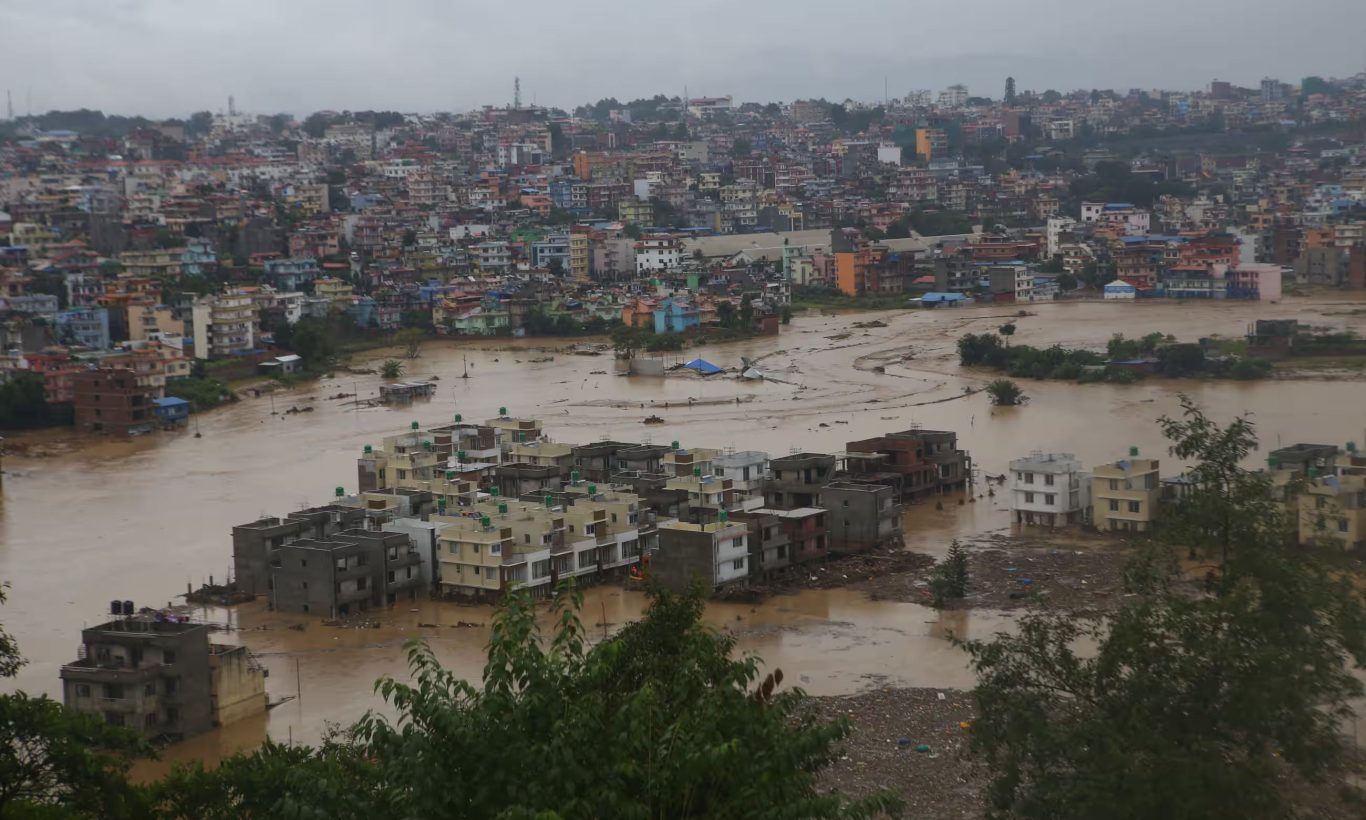
However, rampant deforestation, excessive mining, forest fragmentation, haphazard roads, and building construction — basically, meddlesome human intervention — are destroying the Chure. Without trees to hold water and rein in soil slippage, floods and landslides have become common. Many areas in the Tarai are now grappling with major water crises despite being in the midst of the monsoon season. Taps and wells are dry, and underground aquifers have been depleted so much that even deep bore wells don’t yield water. This crisis is alarming given that the Tarai is the country’s agricultural hub and its most populous region; without sufficient water for drinking and irrigation, millions are at risk.
Just ten days before the August 14 verdict, a group of demonstrators from the Tarai had marked their 100th day of demanding government action to save the Chure region and for the federal government to address the deepening water crisis back home. The group had made their way to Kathmandu on foot earlier in May, walking for 25 days from different parts of the Tarai region, covering hundreds of kilometers. They even marched to Baluwatar, where the prime minister’s office is located. But they received little attention from policymakers and returned home, tired. The water crisis in the Tarai will continue into the coming years if something isn’t done.
The current crisis in the Chure and its knock-on effect on the Tarai have been decades in the making. In the 50s and 60s, after malaria was eradicated in the Tarai, the government sanctioned resettlement programs to populate the area. Settlement programs in the mid-hills and the Tarai were part of a concerted push by the nationalist Panchayat government of king Mahendra to dilute the dominance of Madhesis and other ethnic groups in these areas and establish ‘pahadi’ dominance. These settlement programs led to a rise in population, leading to unplanned urbanization and a national push for large-scale infrastructure projects, particularly highways, tunnels, and hydropower. Much of the raw material for these construction projects was mined from the Chure’s hills and rivers. According to a report from the Ministry of Science, Technology, and Environment, mining activities alone have impacted about 33% of the Chure range over just a few decades.
With the Supreme Court now pushing for legal reforms, there is some hope that the Chure region might finally receive the attention it deserves. However, there is also a fear that the government will continue to ignore the Court’s rulings and proceed with business as usual. After all, successive governments have already done so in the past.
In 2003, a group of citizens living in the Chure area filed suit against the government, arguing that they had been deprived of their right to form a community forest user group and manage a nearby forest as a community as per the Forest Act. The Supreme Court found the decision of the Council of Ministers unconstitutional and upheld the rights of the petitioners.
This decision provided crucial ground for subsequent decisions regarding the Chure, effectively setting a precedent that the rights of citizens to their immediate environment came before the rights of the government to use that environment for the ‘national interest.’ Subsequently, in the 2010 case of Narayan Devkota v. Prime Minister and the Council of Ministers, the Court again decided that the government was only “a trustee and not the owner of natural resources to protect the environment and rights of its citizens.” The Court also ordered the government to formulate a policy to manage the use of natural resources for the public interest of all Nepalis and without any adverse effect on the environment. This decision was ignored, and no such policy was formulated.
However, in 2014, the government designated the Chure landscape as a protected ‘Chure Conservation Area’ during the tenure of then President Ram Baran Yadav. The President Chure Conservation Program, a ‘national pride project,’ was also launched with a 20-year master plan and an investment of Rs 249.72 billion. Annually, the national budget allocates at least a billion Nepali rupees for this project. However, according to this Kantipur Daily report, from the fiscal year 2014-15 to 2022-23, only Rs 14.06 billion has been spent over these nine years. The Auditor General’s 61st annual report even commented that “the work done so far does not correspond to the amount spent.”
This situation is not surprising, and the reasons for the government’s ineffectiveness are pretty straightforward: these young forests are a gold mine in terms of natural resources, like timber, sand, and gravel. Powerful extractive industries are reaping immense profits, and, notably, the government remains either complicit or silent on this matter.
Former President Yadav, one of the few politicians consistently advocating for the Chure range, has accused the “crusher industry mafia” of exploiting the region. Numerous reports have also highlighted the operations of several unregistered crusher plants that operate unabashedly because they are backed by politicians who share the profit, even at the local level.
But protesting this exploitation has proven perilous. A tragic example is Dilip Mahato, a 24-year-old engineering student who was brutally murdered for his activism against illegal mining of the Aurahi riverbed in Dhanusha district in 2020. This ‘sand mafia’ has even attacked journalists for investigating them. News reports have also indicated that local governments may be colluding with the ‘sand mafia’, with some reporting that many construction company owners themselves were elected in the local-level elections of 2018.
The government’s complicity was further demonstrated in 2021 when it attempted to lift a ban on the export of mineral-based construction material, a ban that had been imposed in 2014 as a part of Yadav’s conservation program. Lifting the ban would’ve exacerbated the legal and illegal mining of natural resources from the Chure. This government of the day argued that the export of these construction materials “minimizes the trade deficit.” The Supreme Court, responding to a petition filed by advocate Shailendra Ambedkar, swiftly issued an interim order not to lift the ban, citing Article 30 of the Constitution, which ensures the fundamental right of citizens to a clean and healthy environment.
Time and again, however, politicians leading the government have demonstrated that profit takes precedence over environmental concerns. This is perhaps most evident in successive governments’ pursuit of the planned second international airport in Nijgadh, Bara district, which also falls in the Chure landscape. Despite massive environmental damage from the culling of millions of trees and the destruction of wildlife habitats, Nijgadh still finds its place in every government’s plans and policies as a “national pride” project. More recently, a new law, the Construction Materials (Management and Regulation) Bill, currently under discussion in Parliament, aims to reopen the export of construction materials once again. If passed, this bill could counteract the Supreme Court’s recent directive by potentially allowing increased resource extraction and export.
Sadly, the primary driver of Chure’s degradation remains a familiar issue: exploitative human greed. Politicians speak about conserving the Chure landscape only when seeking support from the people of the Tarai-Madhes. As long as their own interests are served, they appear indifferent to the plight of others.
And while the Supreme Court’s decision is a significant legal victory for environmental conservation, this is only a starting point. Nepali governments have a history of ignoring such rulings and directives under political influence. The crusher industry, in particular, is deeply entrenched with economic and political interests.
The Chure Range is more than just a collection of hills. It’s a vital part of Nepal’s natural heritage, crucial for maintaining biodiversity, ensuring water security, sustaining livelihoods, and even combating climate change. Although the court’s ruling sets a legal precedent, its success will ultimately depend on the government’s commitment to uphold the law and the ability to resist pressure from vested interests. Will the government choose to do the right thing? Your guess is as good as mine.