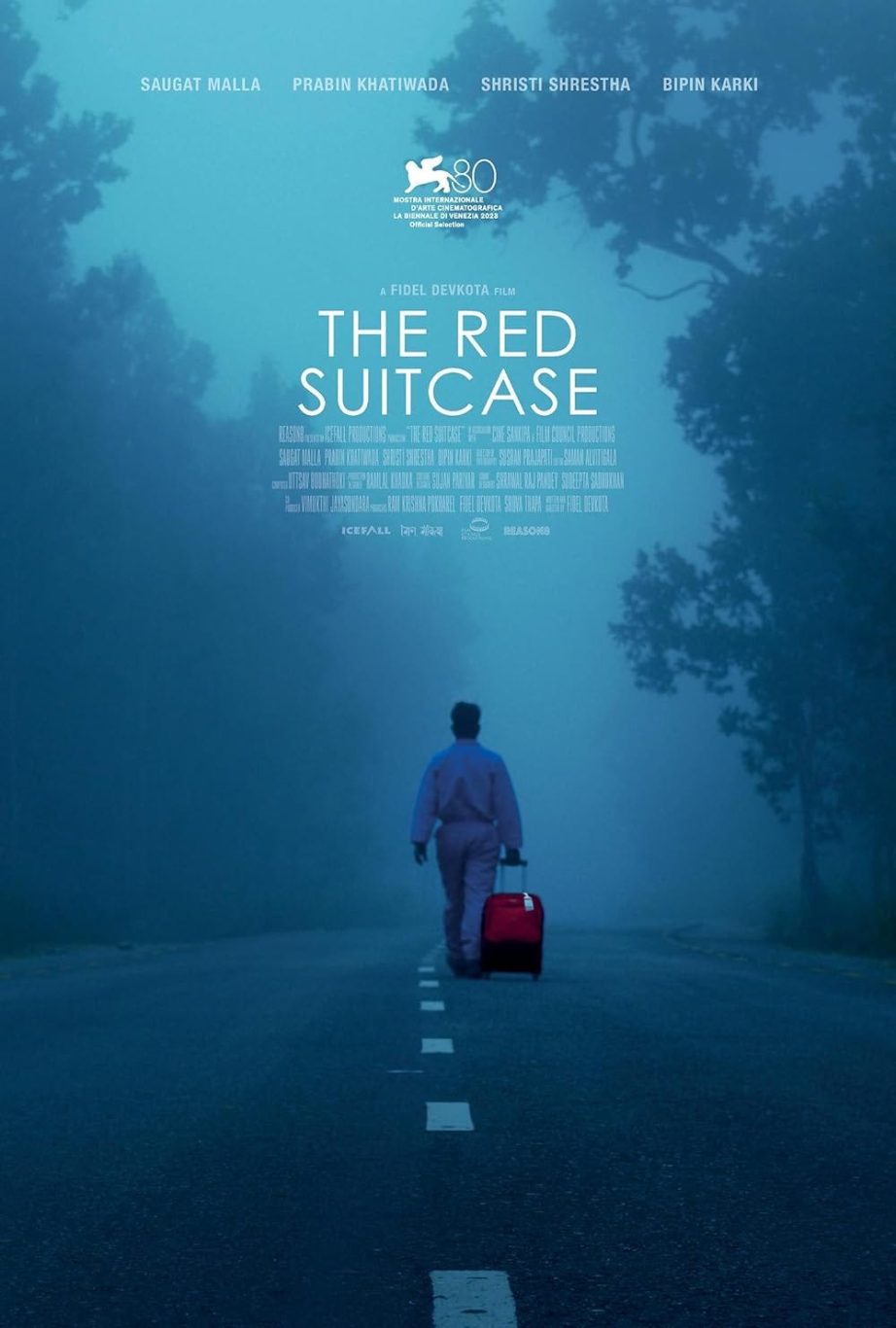


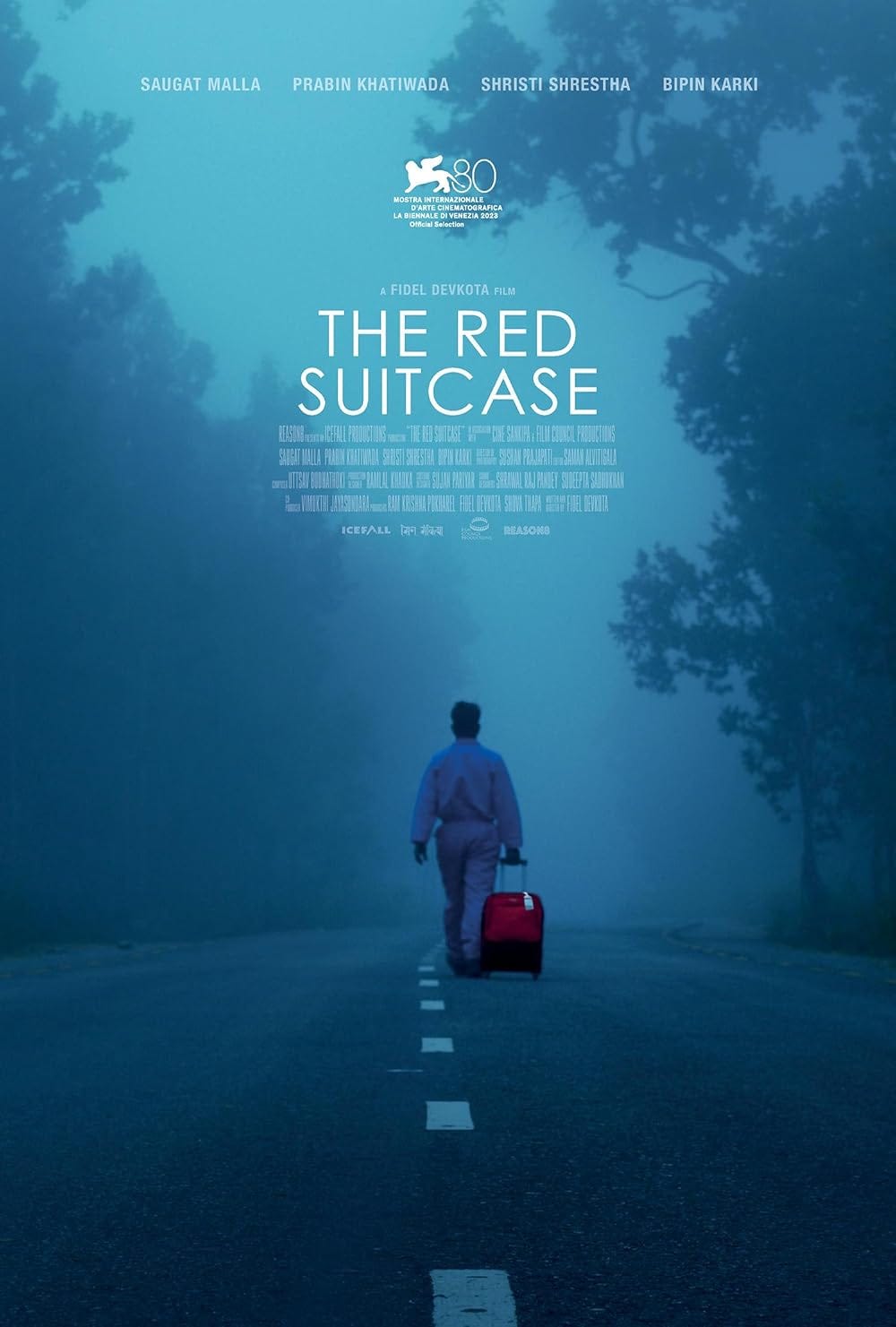
Last Friday, April 12, the film The Red Suitcase was released to the public all over Nepal. The film was showing at all movie theaters, except for QFX, Nepal’s largest movie chain. The story emerged that QFX had refused to provide prime time slots for The Red Suitcase over other domestic and international films, asking that the film be released a week later. The filmmakers took umbrage and decided to go ahead with showings at all other movie theaters.
However, many of the other theaters didn’t provide The Red Suitcase with a prime time slot either. Most theaters had just a single showing of the film each day, usually in the afternoons. The prime time evening and night slots went to other more mainstream Nepali fare like Degree Maila and Mahajatra, both slapstick comedies that the Nepali audience enjoys most. As of writing, Degree Maila has six shows each day at FCube Theaters, Mahajatra has five while The Red Suitcase has just one. At Big Cinemas, Degree Maila has 10 showings, Mahajatra has five and The Red Suitcase has none. The only theater offering The Red Suitcase twice daily is One Cinemas, at 3.15PM and 5PM. Even here, Degree Maila has 10 shows a day.
Why does this matter? The Red Suitcase is not a mainstream Nepali film so I understand the reluctance of theaters to give it fewer shows. The film premiered at the Venice Film Festival and is an arthouse flick, not exactly the kind of film that packs theaters. It stars Saugat Malla and Bipin Karki, two very popular actors, but it seems like theaters did not deem their presence a big enough draw. Movie theaters will play what the audience wants to watch; it is no fault of theirs that the Nepali movie-watching audience tends to stay away from films that are slightly offbeat or experimental.
This isn’t just the case with The Red Suitcase. Even Min Bham’s critically acclaimed Kalo Pothi (The Black Hen) had few shows and didn’t run for long, and that film was much more widely anticipated. Both films were shown on the international festival circuit but Kalo Pothi attracted more buzz, given its Best Film win at the Venice Film Festival’s International Critics’ Week. It also had a far more intriguing trailer with striking visuals that made audiences want to watch it. Still, it didn’t come anywhere close to making the kind of cash that other mainstream films rake in. For an oblique open-ended art film, it did well. The Red Suitcase had a buzz going for it but that wasn’t enough to convince theaters.
Forget film festival offerings, even offbeat films made in Nepal for Nepali audiences don’t end up doing well. Recent films like Chiso Ashtray, Aina Jhyal ko Putali, and Paani Photo were all well-reviewed but didn’t attract audiences. The film Hari, one of my favorite Nepali films, ran for barely a week because no one went to see it. Meanwhile, the slapstick Chhakka Panja franchise, which is currently in its fourth installment, makes millions each time despite its lowbrow humor, lack of coherence, and over-the-top acting of its stars.
This shouldn’t surprise anyone. Critically acclaimed films rarely make a lot of money in this part of the world. Even most of Bollywood’s mainstream output is formulaic drivel that is meant to appeal to as broad an audience as possible. It’s the same thing here. Many Nepali films follow Bollywood trends but the industry has its own quirks. The Chhakka Panja series, for instance, always has a ‘social’ element where taboos and social ills are dissected, albeit in a very superficial manner. The audience in this part of the world consists mostly of people who go to the movies purely for entertainment. They want to laugh, enjoy themselves, and have a good time, and there’s nothing wrong with that.
The young, hip, urban audience is the one doing diversity in Nepali films a disservice. This audience demographic stays away from mainstream Nepali fare because of its cliche plot lines, terrible acting, and bad script. This audience consistently complains about the lack of quality Nepali films, ones that take risks and do something different with a creative script, unorthodox performances, or striking cinematography. But when something different does come around, this demographic doesn’t go to watch those films either, instead waiting for them to become available on YouTube. They would rather spend their money on the next installment of the Marvel franchise.
Films cost a lot of money to make and Nepali producers are notably finicky about where they put their money. (An aside: Kudos to Icefall Productions, one of the few Nepali production houses taking chances on more experimental fare like Aina Jhyal ko Putali and The Red Suitcase). Few large production houses are willing to take risks on artistic fare that might win awards but lose money. So directors working with an offbeat script either have to seek funding from abroad, as directors Min Bham and Deepak Rauniyar often do, or scrape together funds from friends and well-wishers. When their films bomb at the box office, the opportunities for these directors to make another film get noticeably smaller. What ends up happening is that young, creative filmmakers get disillusioned and end up leaving the industry or worse, decide that they have to compromise on their artistic vision and go mainstream.
It’s a tragedy. Despite the success of films like Kalo Pothi and Seto Surya on the festival circuit, similar films receive lackluster responses back home. This only cements the perception that these kinds of films are meant for international audiences. What needs to happen is for those who claim to love films to go out and see them. Whenever an interesting independent film comes out, go see it. It might be a bad film but it’s just an hour-and-a-half and a few hundred rupees. The filmmakers will appreciate it and hopefully, have enough funds to take another stab at trying something new. Maybe chains like QFX can also take a chance. I know that the people who run QFX love films so perhaps they can provide alternative screening provisions for films that deserve a bigger audience. They can chalk it up to their Corporate Social Responsibility, if need be.
The thing is, a vast majority of Nepali films are objectively terrible but audiences love them. Some directors are happy making commercial films that entertain audiences while others would prefer to go in a more creative direction and create art. There should be space for both. Art films will never make as much money as commercial films but there’s no reason why they can’t have a modest collection that makes back the budget. Not every film needs to be a blockbuster. There’s also prestige. Nepali films have never won any major international awards. The last time a ‘Nepali’ film was nominated for Best Foreign Film at the Oscars, it was Caravan (also known as Himalaya), which Eric Valli, a Frenchman, directed. I’m sure many producers would love to have their film win an Oscar for the very first time.
As for The Red Suitcase, is it a good film? Yes and no. It has an interesting conceit, fine performances from Saugat Malla and Bipin Karki, but the plot is cliche and the dialogue pretentious. The cinematography is beautiful at times but it is more style over substance. All of that said, do I think you should go out and see it? Absolutely.