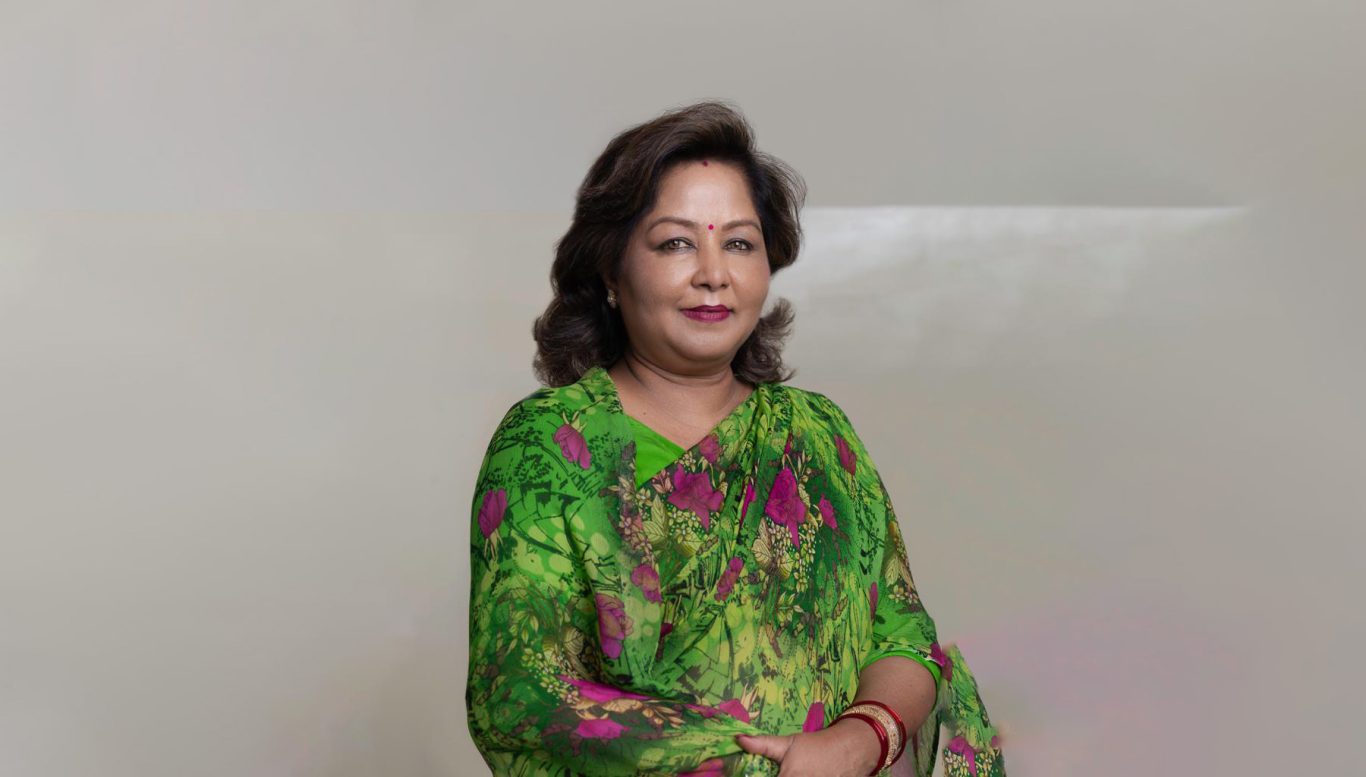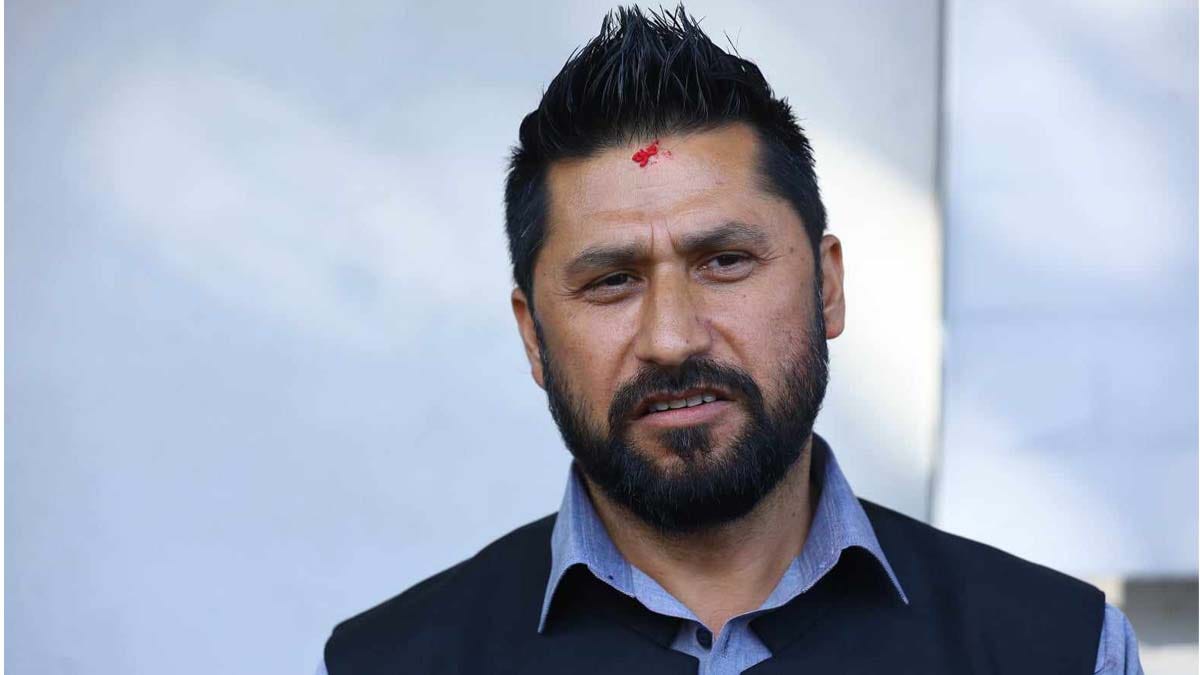


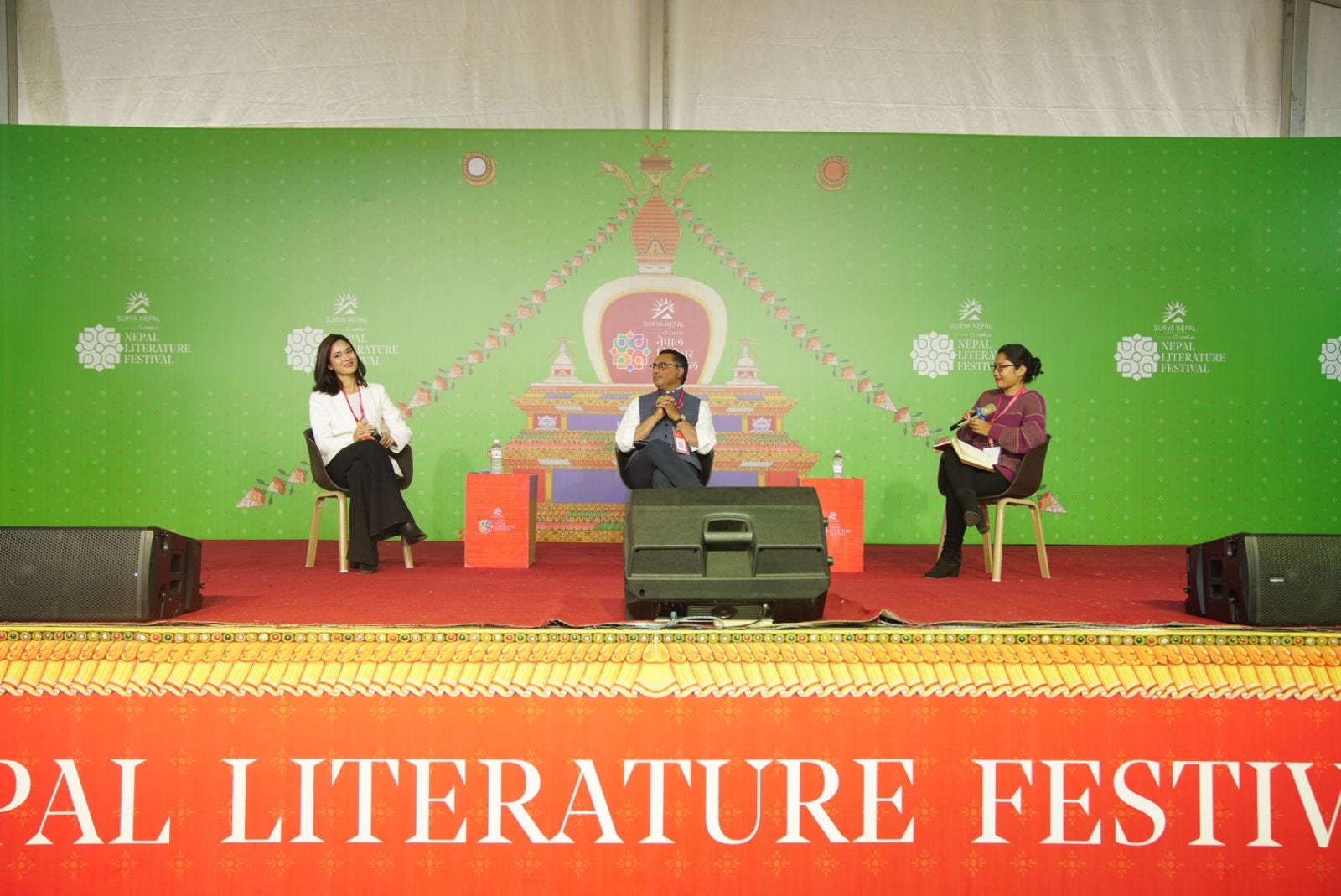
This past weekend was the Nepal Literature Festival, a yearly gathering of writers, poets, musicians, activists, politicians, and everyone else who gather in Pokhara for a series of discussion sessions. The Festival is not just about literature and covers a variety of topics, everything from sports and tourism to culture and films. One of these discussions was titled ‘Brain gain: What to do after returning to Nepal?’ and featured economist and Member of Parliament Swarnim Wagle and former Miss Nepal and urban planner Shrinkhala Khatiwada with Nepali Times executive editor Sonia Awale as moderator. The discussion was fairly run-of-the-mill with Wagle pointing out the historical tradition of Nepalis migrating for work — as traders to Tibet or as soldiers in the British and Indian armies. Khatiwada, meanwhile, pointed out that Nepalis were migrating for better opportunities, whether that is employment or academia.
However, one Twitter post by the Nepal Literature Festival sent much of Nepali social media into a tizzy. The post was a photo of Khatiwada with a caption of a quote that said: “नेपाल खत्तमै भयो, यहाँ भविष्य नै छैन भन्ने जुन भाष्य निर्माण भएको छ, यसको जाँचै नगरी युवाहरू बाहिरी रहेका छन्।” (The perception that Nepal has been destroyed, that there’s no future here, has been created without proper examination, which in turn is leading the youth to leave.) Social media, especially Twitter, is not an ideal forum for nuanced discussions but still, the vitriol directed towards Khatiwada was on a whole different level. While some comments blamed her for not acknowledging her privilege, others resorted to very personal attacks, alleging that her father, Birodh Khatiwada, is a corrupt politician and that her husband, Managing Director of Kantipur Publications Sambhav Sirohiya, does not pay his employees. The former is baseless as there is no credible evidence that Birodh Khatiwada has indulged in corruption. The latter, however, is true. For over four months, journalists from Kantipur Publications have been on strike demanding their due salaries. Neither of the two accusations has any bearing on Khatiwada’s opinion, though.
Before we get to the substance of Khatiwada’s statement, let’s talk a little bit about why she became such a big target. Khatiwada came to fame as a beauty pageant contestant, winning Miss Nepal 2018. The public perception was that she was an ideal Miss Nepal, a beautiful, charismatic young woman who was also very smart. That she graduated at the top of her architecture class at the Insitute of Engineering, a notoriously difficult feat, was testament to her intelligence. After winning Miss Nepal, she went on to become a popular model and eventually made her way to Harvard’s Graduate School of Design to pursue a Master’s in Urban Planning.
It was around this time that public opinion began to turn against her. As a public figure, her love life was known to many, especially since she had been dating Sisan Baniya, a popular vlogger. When she broke up with Baniya and began to date Sirohiya, many of her fans turned on her, labeling her a ‘gold digger’ who exemplified how women will eventually always choose a wealthy man to settle down with. These were vile opinions espoused by a very vocal minority of terminally online misogynistic men. It was no one’s business who Khatiwada chose to date, but many men just couldn’t stand to see an attractive and smart woman exercising her right to choose who she fell in love with, who in this case just happened to be a very wealthy and powerful man. The trolling got so bad that Baniya himself had to take to social media to call on his followers and her detractors to stop harassing her and let her live her life.
All of this was reflected in the trolling she received over her alleged remarks at the literature festival. After hundreds of comments and retweets, Khatiwada felt the need to provide context, sharing several clips from the session that clarified her position. In those clips, she very clearly acknowledges her privilege and states that the primary reason many Nepalis don’t return to Nepal is the fact that they are not financially secure here in the country. She goes on to say that there are two categories of Nepali migrants — one, mostly the poor and underprivileged who go to work in the Middle East and Malaysia on temporary work visas, and two, those with some financial means who go abroad to study or to find work that suits their academic credentials. The former category will return to Nepal since they are temporary migrants; the challenge is to keep them here in Nepal and not force them to migrate again. It is much more difficult to get those in the latter category to return. She believes in the power of the market and that it is the private sector that must create jobs while the government acts as a facilitator. She also points out how globalization has led to the opening of borders and a greater demand for workers. Finally, she talks about Nepal’s dependence on remittance and how we aren’t putting the cash into productive sectors but are investing in fixed assets and ‘lifestyle growth’.
You can certainly disagree with Khatiwada’s opinions. I certainly do with at least a few of them. While I do agree that it is important for Nepal to focus on retaining temporary migrants, as they come back with valuable skills and experience, I disagree with her faith in the market. Without the guiding hand of the government, in the form of laws and policies, the market will not regulate itself. Capitalism seeks profit and an unregulated market will ultimately exploit workers. I don’t think Khatiwada is advocating for a laissez-faire approach, though. So I guess my disagreement is not too extreme. We might even agree on reforming structures so that workers are protected and that capitalism doesn’t run amok. For instance, journalists working for private media houses are not paid the minimum wage dictated by law, many don’t even get paid on time. Sugarcane farmers protest every year after not being paid by sugar mill owners. Victims of predatory loan sharking are marching in Kathmandu right now after taking loans out at exorbitant interest rates. These are all direct results of unfettered capitalism when the state looks the other way. It should be said, however, that this is not because the state believes in the power of the market but because it is hopelessly corrupt and ineffective.
I also agree that globalization has opened borders but it also turned neoliberalism into the prevailing world order. Workers aren’t the only ones who are moving; capital is much more mobile. (Read this interview with David Harvey for more on globalization, neoliberalism, and mobile capital). Investments are made the world over and profits are routed through tax havens and offshore companies. Labor, meanwhile, is exploited most because cheaper labor is always just a few countries over — Mexicans in the US, Eastern Europeans in the UK, South Asians in the Middle East. These workers live on the margins as a disenfranchised and exploited class of people. Labor laws often do not apply to them — even when they do, aren’t applied fairly — and organizing is all but grounds for deportation. Wages are a fraction of what constitutes a living wage but it’s all good since it is more than what they would’ve made back home.
Nearly 500,000 Nepalis leave the country every year for work; that’s over a thousand people every day. This number doesn’t even account for migrants to India, which is probably just as large by itself. Young graduates wish each other safe journey and pledge to meet each other in the Middle East. Another 100,000 leave the country to study abroad. Nearly a million people every year. The country is emptying out. Entire villages are left with just women and children. It is a catastrophe in many ways, the consequences of which we will see soon enough. Already 10 Nepalis were killed in the Hamas attack on Israel on October 7, 2023. (Reminder: Bipin Joshi is still being held hostage by Hamas and everyone seems to have forgotten about him.) A broader crisis in the Middle East will mean that hundreds of thousands of disgruntled Nepalis will return home looking for jobs that don’t exist. Remittance will collapse, worsening the situation. That will be a real disaster.
Yet, we want them to return. Those of us who remain in Nepal wish that others would do the same. But we also understand the desire not to. At least I do. It’s not easy to live in Nepal. Returning to Nepal to pursue one’s passion is a luxury reserved for the very few, the privileged, like me. For those without social or financial capital, there are no jobs, and the few that there are pay a pittance. Why not go abroad again, then? What keeps them here? That’s a point on which I agree with Shrinkhala Khatiwada. But jobs aren’t enough; they need to be good jobs that pay a living wage.
So why return to Nepal? There’s really no reason to. It would be nice if you did but frankly, that’s not something anyone can impose on anyone else. Freedom of movement is a universal human right, after all. People have their own desires and wants. I know many women who won’t return to Nepal simply because they enjoy their freedom in the West. I know scientists and academics who won’t return because there’s nothing for them to do here. I also know people who will return, only to go abroad again. Why go back to building houses for 30,000 rupees a month when you can make triple that building stadiums in Qatar? It’s a choice but for the privileged who did return, it’s one we made willingly.
Yes, there are opportunities in Nepal but they are held back by a sea of bureaucracy and political corruption. There is little we can expect from the state. Even if it can’t help, bland indifference would be better than what seems like active malice. Returning takes something more than patriotism. Family is one thing that pulls us back but what else is there? Ideology? A desire for something bigger than oneself? A need to make a mark? Or maybe delusion? The truth is that Nepal asks for everything but offers nothing in return.